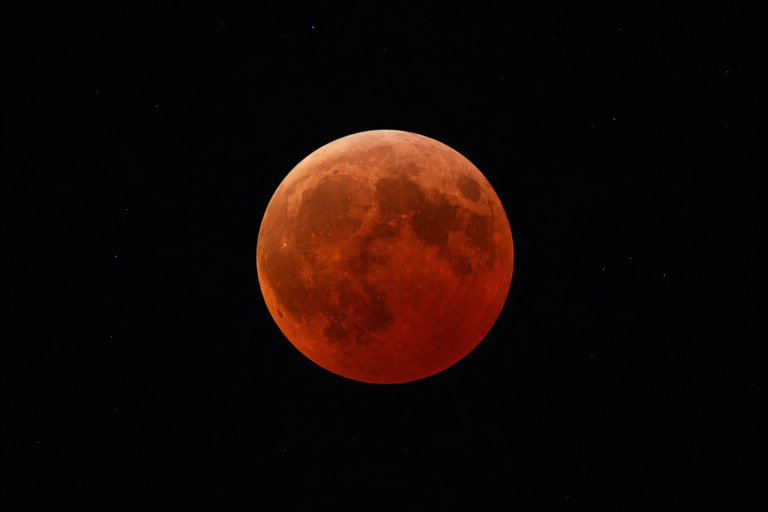
The Apollo Legacy
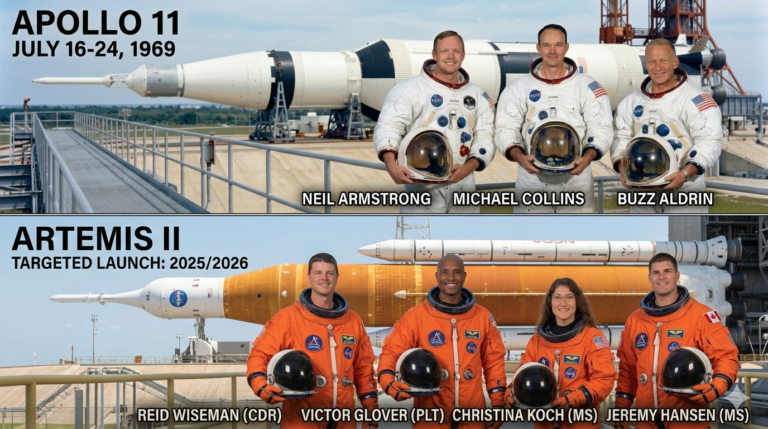
Humans first reached the Moon in July 1969 with Apollo 11. The crew — Neil Alden Armstrong, Michael Collins, and Edwin “Buzz” Aldrin Jr. — made history when Armstrong became the first human to step on the Moon while Collins orbited above. Apollo 11 paved the way for all future lunar exploration, marking a milestone in human space travel.
Decades later, NASA would build on this legacy through the Artemis program, leading to missions like Artemis II.
Artemis II Mission Overview
NASA’s Artemis II launched on April 1, 2026, carrying four astronauts on a 10-day lunar flyby mission aboard the Orion spacecraft. The crew includes Commander Reid Wiseman, Pilot Victor Glover Jr., and Mission Specialists Christina Koch and Jeremy Hansen. The mission’s main goal is to test Orion’s deep-space systems with humans on board before future Moon landings.
This Artemis II mission marks NASA’s first crewed step in returning humans to deep space since the Apollo era, preparing for future lunar and Mars exploration.
Learn more about Artemis II at NASA
First Photos from Artemis II
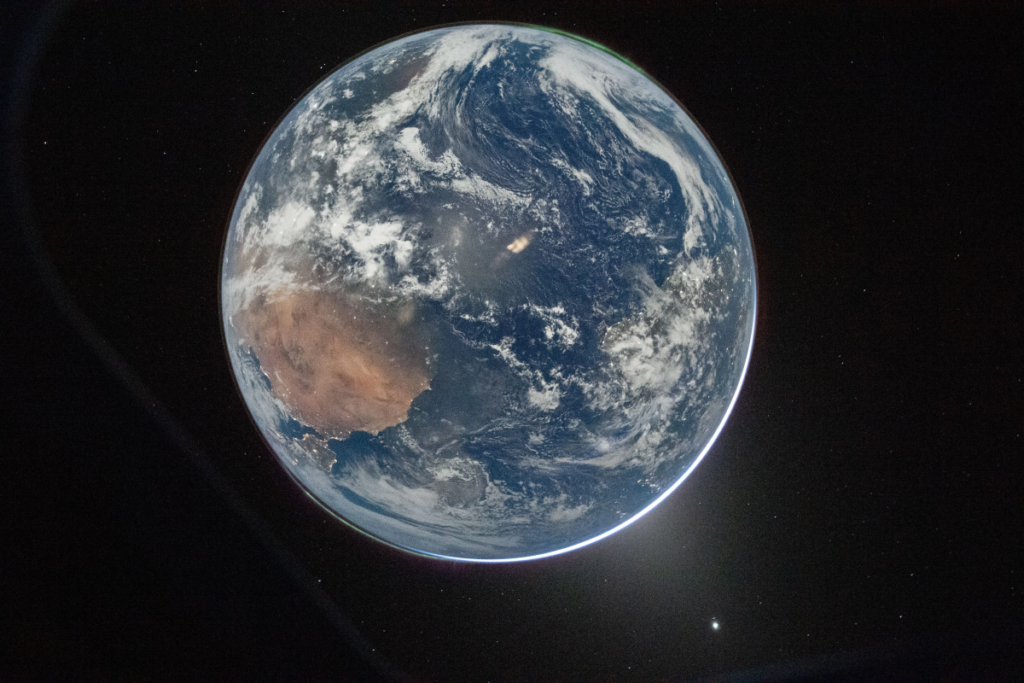
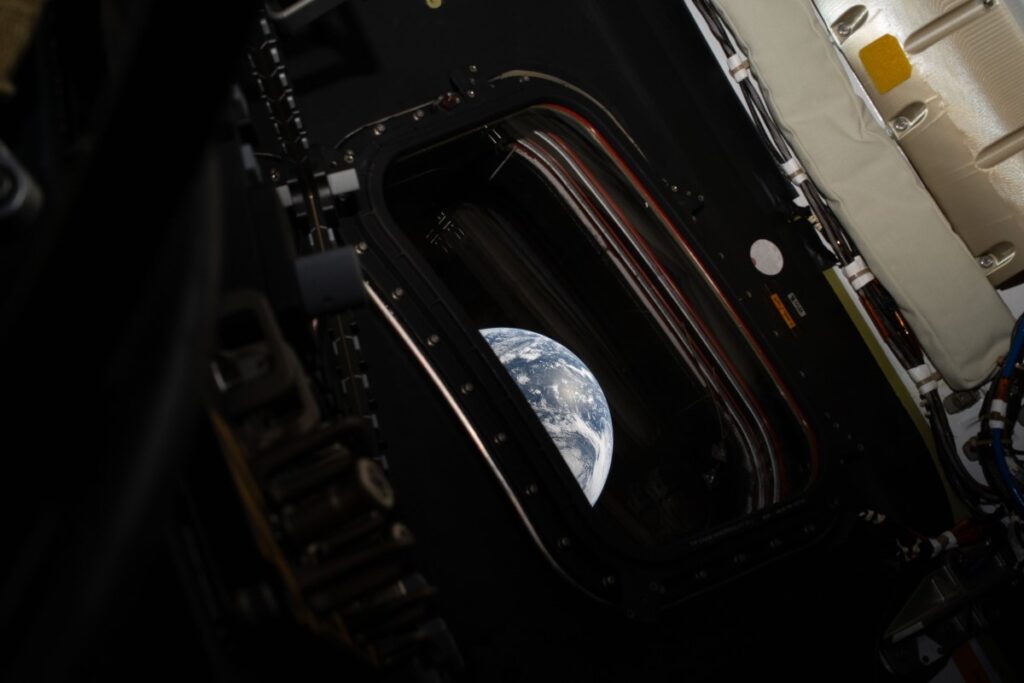
The first images from Artemis II were sent from the Orion spacecraft after the translunar injection burn. NASA astronaut Reid Wiseman captured stunning views of Earth showing two auroras, zodiacal light, and Earth partially eclipsing the Sun.
These are the first human-captured images from this distance in decades, offering a rare deep-space perspective of our planet during the Artemis II mission.
You can also link here to the official NASA image article: Hello World: Artemis II First Images
More Earth Images from Artemis II Released

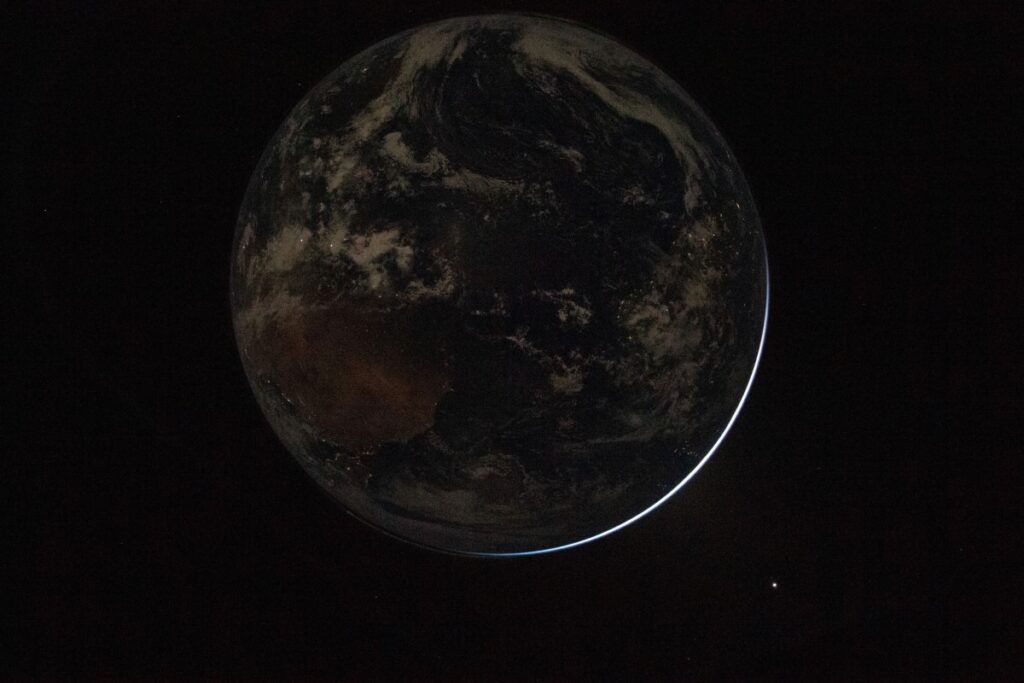
Earth view from the Orion spacecraft showing the terminator dividing night and day, taken by NASA astronaut Reid Wiseman during the Artemis II mission. Earth view from the Orion spacecraft showing electric lights of human activity and sunlight on the planet’s limb, taken by NASA astronaut Reid Wiseman during the Artemis II mission
The Artemis II crew has shared even more stunning views of Earth:
- In one image, the terminator — the divide between night and day — cuts across the planet, showing all of us together, whether awake or asleep.
- In another shot, the electric lights of human activity are visible from space, while sunlight illuminates the limb of Earth in the lower right.
- These photos were taken after the translunar injection burn on April 2, 2026, as the crew began their lunar flyby mission.
These images not only offer breathtaking views but also highlight the delicate balance and beauty of our planet from space, as seen during the Artemis II mission. Seeing Earth’s night lights alongside the sunlight on the limb reminds us of the global perspective astronauts gain, and why missions like Artemis II are crucial for testing human spaceflight capabilities and preparing for future exploration beyond the Moon.
Final Thoughts
From Apollo 11 to Artemis II, humans are returning to lunar space with far more advanced technology. The Artemis II mission is a crucial step toward NASA’s plans for future Moon landings and eventually sending humans to Mars. It connects the bold first steps of Armstrong with today’s era of deep space exploration.
These missions show how far humanity has come — and highlight how Artemis II represents a new chapter in human space exploration, pushing the limits of what is possible beyond Earth.
For more space facts and the latest on human exploration, visit Too Lazy Facts.