
People search for “what is a blood moon” every time it shows up in the news or on social media, usually because the name sounds intense or even a bit scary. But the truth is much simpler.
A Blood Moon is not a supernatural event. It’s a natural phenomenon that occurs during a total lunar eclipse. And the red color people see is caused by light passing through Earth’s atmosphere, not by the Moon actually changing color.
What Is a Blood Moon?
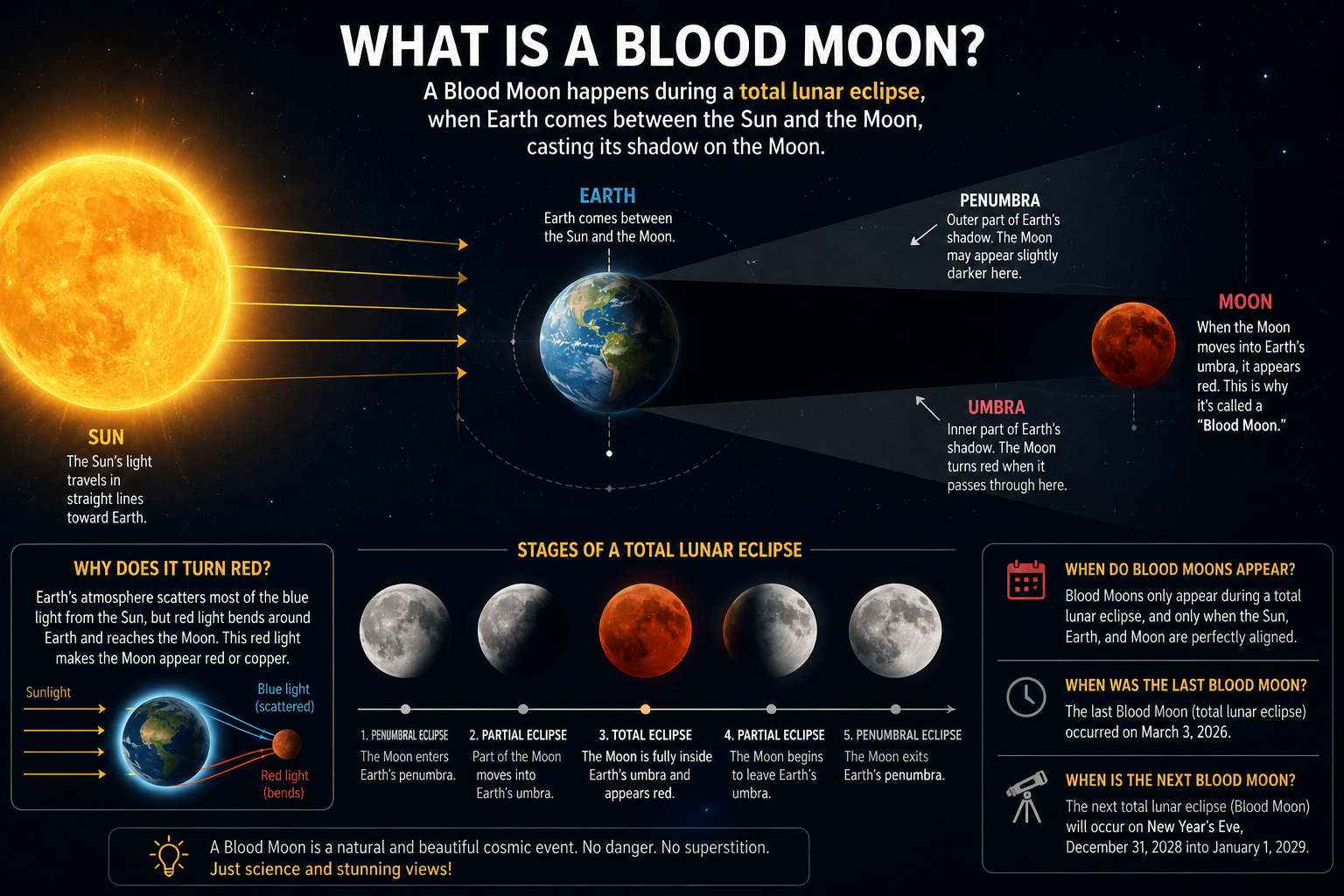
A Blood Moon happens during a total lunar eclipse, which is when Earth moves directly between the Sun and the Moon.
So if you’re asking what is a blood moon, here’s the simple answer:
It is a full Moon that turns red during a total lunar eclipse.
The red color happens because Earth’s atmosphere filters sunlight. Blue light gets scattered away, while red light bends around the Earth and reaches the Moon. That reflected red light is what you see in the sky.
So the Moon is not burning, bleeding, or changing color on its own. It’s just light physics.
What Is the Difference Between a Blood Moon and a Blue Moon?
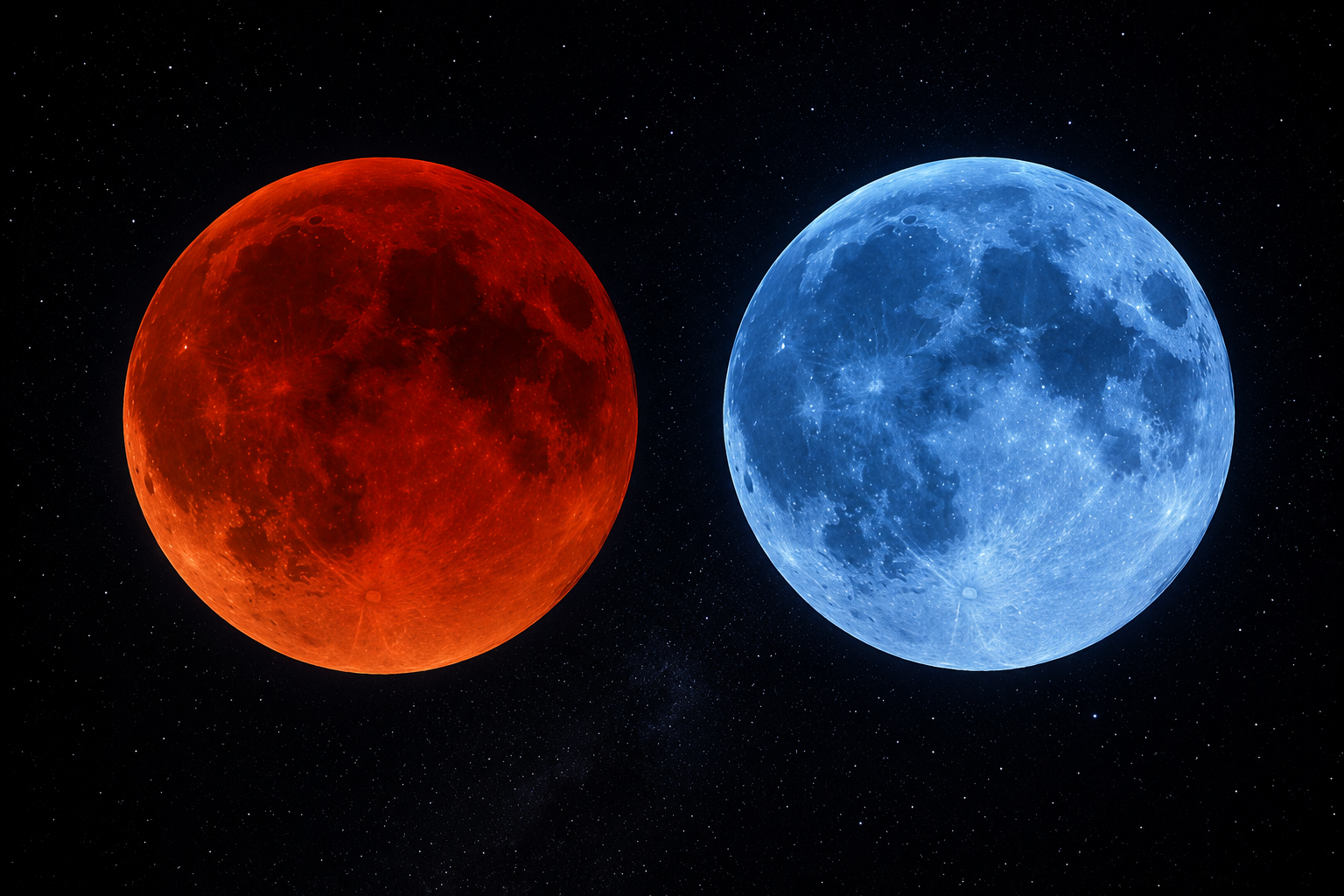
A Blood Moon and a Blue Moon are often confused because both sound rare, but they are completely different types of events.
A Blood Moon happens during a total lunar eclipse, when Earth blocks sunlight and filters it through the atmosphere. This makes the Moon appear red.
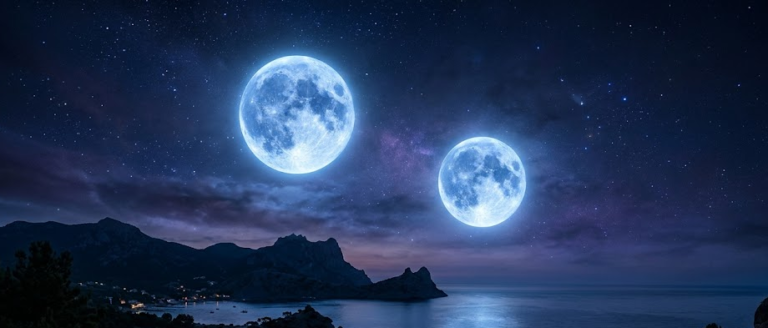
A Blue Moon has nothing to do with color or eclipses. It simply refers to an unusual calendar event where either:
- Two full moons occur in the same month, or
- A third full moon appears in a season with four full moons
So the key difference is simple:
- A Blood Moon is caused by light and Earth’s shadow
- A Blue Moon is caused by calendar timing
This difference makes both events interesting in completely different ways. A Blood Moon is a visual phenomenon you can actually see during an eclipse, while a Blue Moon is more of a timing oddity in the calendar.
Why Does a Blood Moon Turn Red?
The reason a Blood Moon turns red is due to a process called atmospheric scattering, specifically Rayleigh scattering.
When sunlight passes through Earth’s atmosphere:
- Shorter wavelengths, like blue light, scatter in all directions and get filtered out
- Longer wavelengths, like red and orange, pass through more easily
- That red light bends through the atmosphere and reaches the Moon during a total lunar eclipse
This same scattering effect is also why the sky appears blue during the day and why sunsets often look red. So a Blood Moon is basically a giant Earth-filtered sunset projected onto the Moon.
When Do Blood Moons Appear?
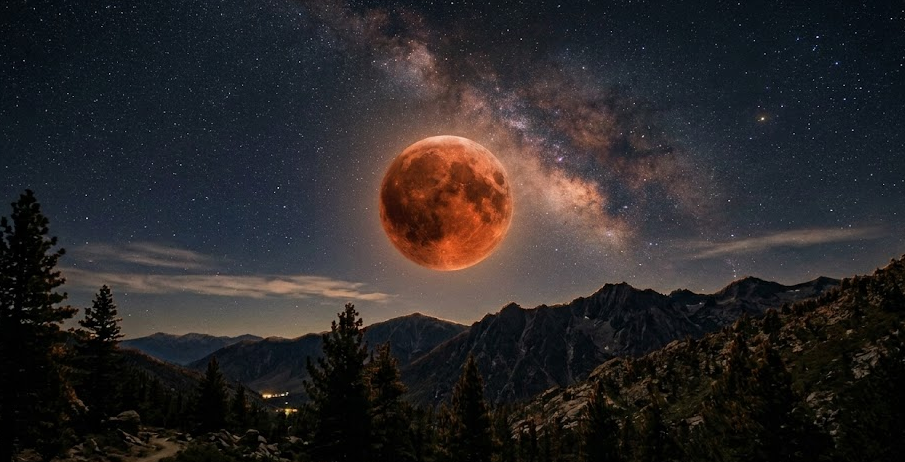
If you’re searching when do blood moons appear, the answer is simple: they only happen during a total lunar eclipse.
A Blood Moon occurs when the Sun, Earth, and Moon are perfectly aligned, with Earth casting its full shadow over the Moon. This alignment allows the Moon to pass through Earth’s umbra, creating the red appearance. Unlike normal full moons that follow a regular monthly cycle, Blood Moons depend entirely on orbital alignment. This is why they don’t happen every month or even every year.
When Was the Last Blood Moon?
If you’re wondering when was the last blood moon, the most recent total lunar eclipse that produced a Blood Moon occurred on March 3, 2026.
In the GMT+8 time zone (Philippines), the Blood Moon would have been visible during the nighttime hours of that date, depending on the exact timing of the eclipse. In some areas, it appeared as a full red eclipse, while in others, it may have been partially visible or not visible at all due to daylight or weather conditions.
A Blood Moon only happens during a total lunar eclipse, so when people ask about the “last one,” it always refers to the most recent global eclipse event, not something tied to a specific country or monthly cycle.
When Is the Next Blood Moon?
If you’re searching when is the next blood moon, the next total lunar eclipse that will produce a Blood Moon will occur on December 31, 2028, into January 1, 2029.
This means the next Blood Moon will happen during the New Year transition, depending on your time zone.
In the GMT+8 time zone (Philippines), the eclipse timing will fall within that night window, but visibility will still depend on local conditions like weather and whether the Moon is above the horizon during totality.
A Blood Moon only happens during a total lunar eclipse, which is why it doesn’t occur every year. Between now and 2028–2029, there will still be partial lunar eclipses, but they will not produce the full deep red Blood Moon effect.
Final Thoughts
A Blood Moon is simply a total lunar eclipse where Earth’s atmosphere bends sunlight and makes the Moon appear red.
There’s nothing supernatural about it, even if the name sounds intense. It’s just light, shadow, and orbital alignment working together in a way that creates a rare and dramatic view in the night sky.
Even though it’s scientifically predictable, it still feels special when it happens because you don’t see it often, and the deep red color completely changes how the Moon normally looks. So instead of a mystery or a bad omen, a Blood Moon is really just one of the most visually striking events you can witness in astronomy.
Did you get to watch the Blood Moon, or did you miss it this time?
For more space facts and the latest on human exploration, visit Too Lazy Facts.




One Comment