Ever wondered why the planets are named the way they are?
The names of the planets aren’t random. They come from ancient mythology, especially from Roman and Greek gods. Early astronomers didn’t have modern science, so they relied on what they saw, like brightness, color, and movement, and connected them to powerful deities.
But there’s one planet that completely breaks the pattern.
Let’s break it down.
Mercury — The Swift Messenger
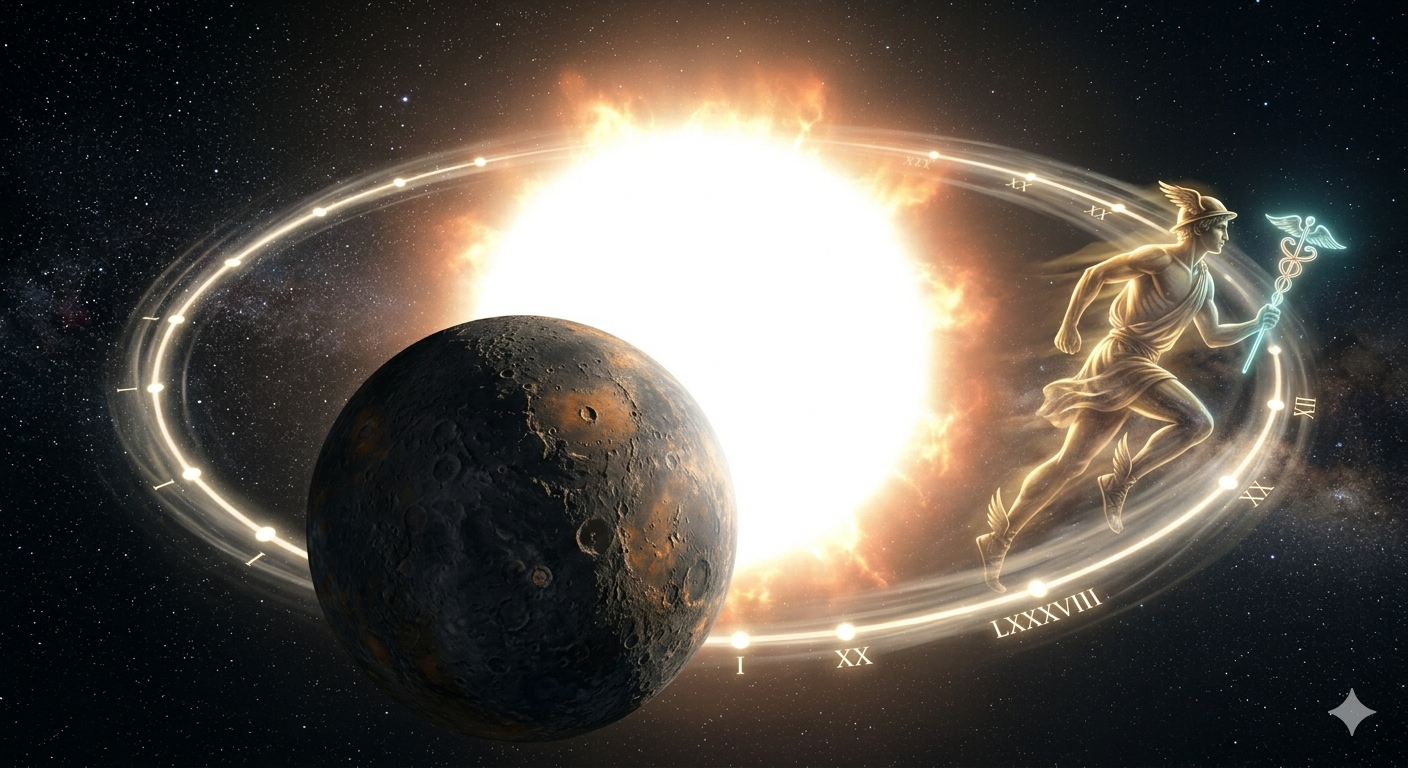
Mercury is the fastest-moving planet in the sky, completing an orbit around the Sun in just 88 days. Because of this extreme speed, the Romans named it after Mercury, their messenger god, who was believed to move freely between the realms of gods and humans. In ancient observations, the planet’s quick shifting position against the background stars made it stand out as something constantly in motion, reinforcing its association with speed and travel.
That rapid movement made the name a perfect match.
Venus — The Brightest Beauty
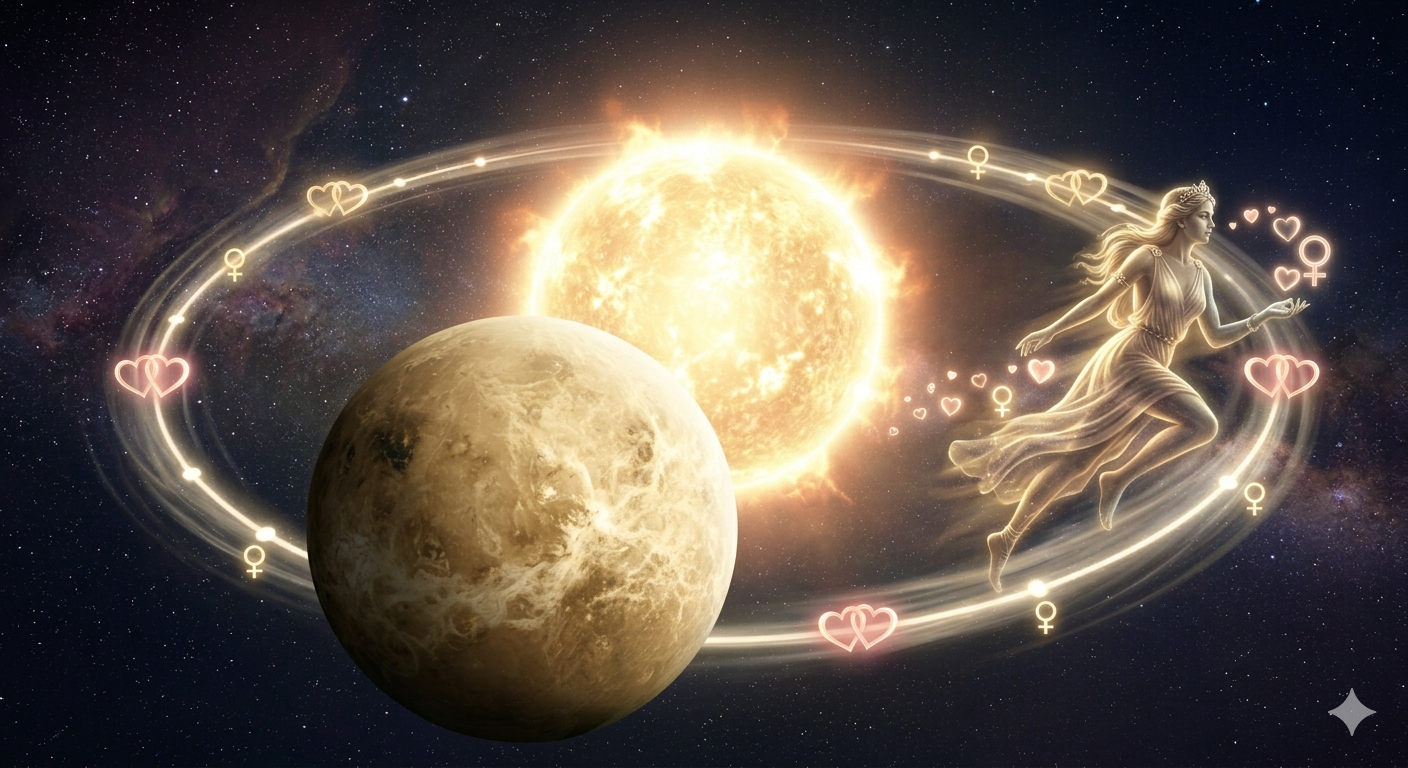
Venus is the brightest natural object in the night sky after the Moon, often visible just before sunrise or after sunset. Because of this, it has been known for centuries as the “Morning Star” or “Evening Star,” depending on when it appears. Its intense glow made ancient civilizations associate it with beauty, harmony, and elegance. The planet’s steady, radiant presence stood out among the wandering lights in the sky, making it impossible to ignore.
That is why it was named after Venus, the Roman goddess of love and beauty — a symbol of attraction, charm, and desire.
Earth — The Only Exception
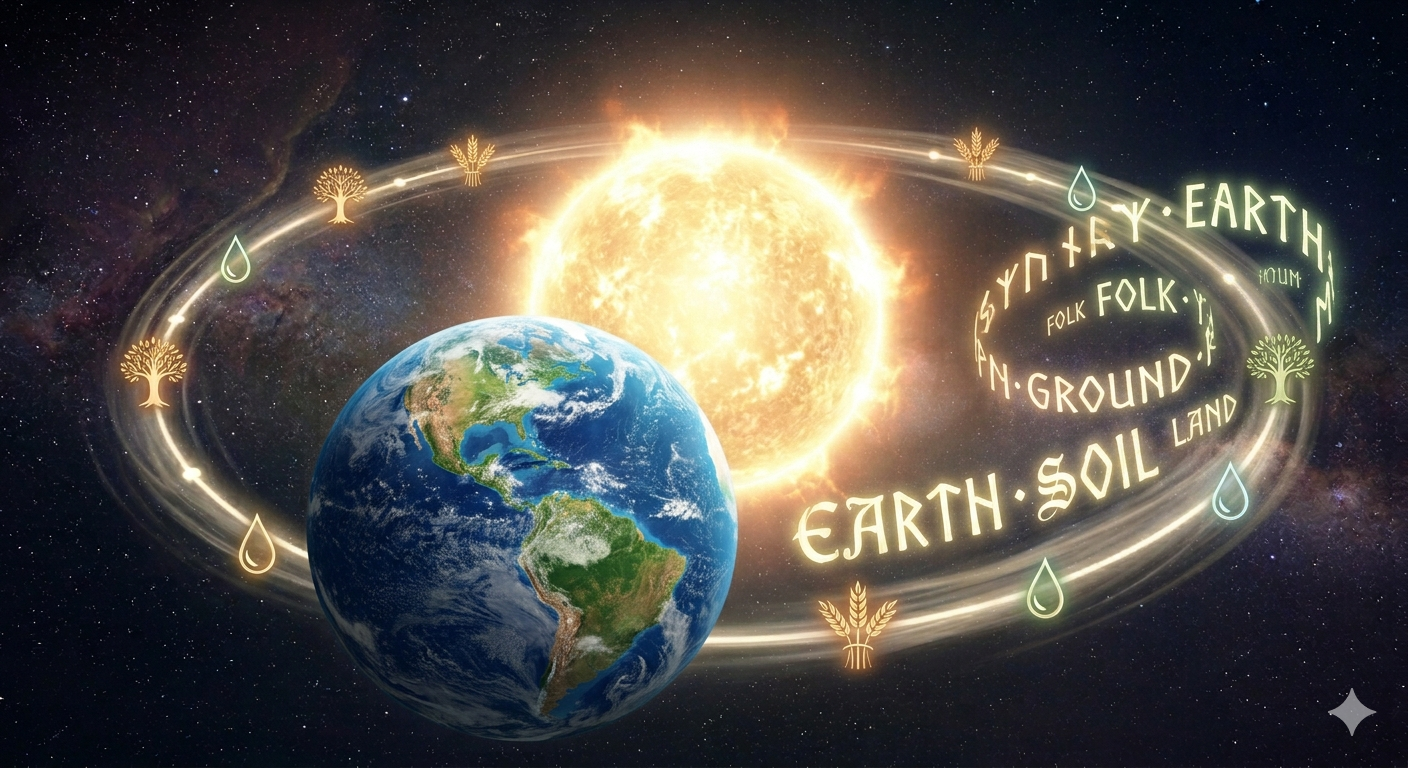
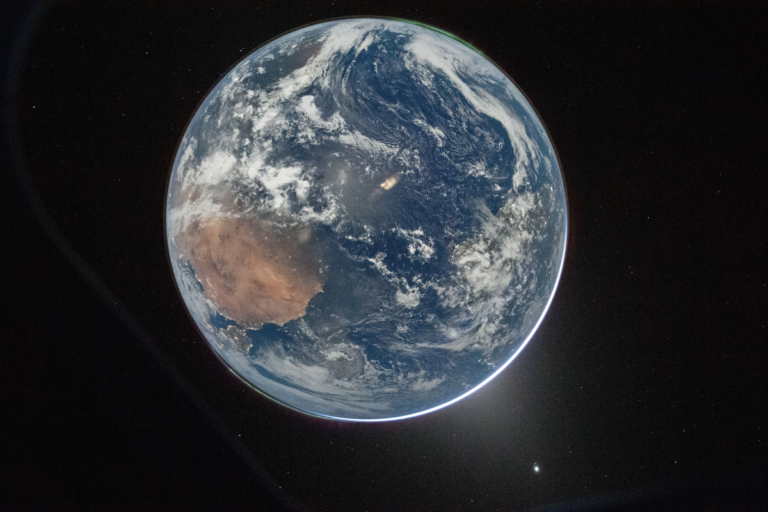
Earth stands out among the other planets because it is not named after a god or mythological figure. Its name comes from Old English and Germanic words like “eorthe” and “erde,” meaning ground, soil, or land. Unlike the other planets, which were named to reflect gods and legends, Earth’s name is simple and practical, tied directly to where humans live every day.
This makes Earth the only planet whose name comes from everyday language rather than mythology.
Mars — The Red Planet of War
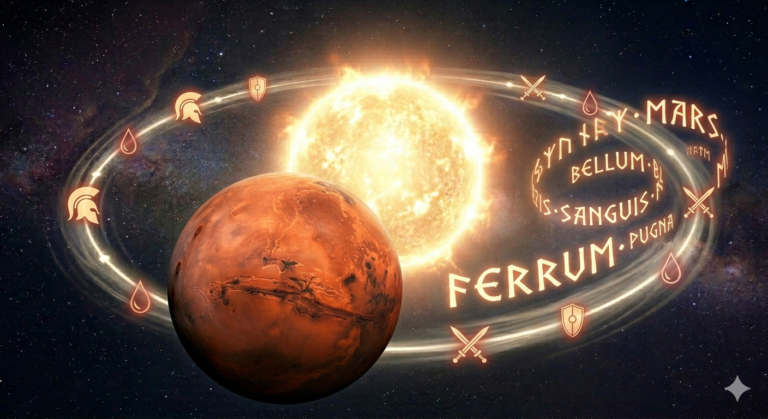
Mars has a distinct red color, caused by iron oxide on its surface — essentially rust. To ancient observers, this red glow resembled blood, which led them to associate the planet with conflict and battle.
Because of this, it was named after Mars, the Roman god of war. The planet’s harsh, rocky landscape and massive dust storms further reinforce its violent and hostile image.
Jupiter — The King of the Gods
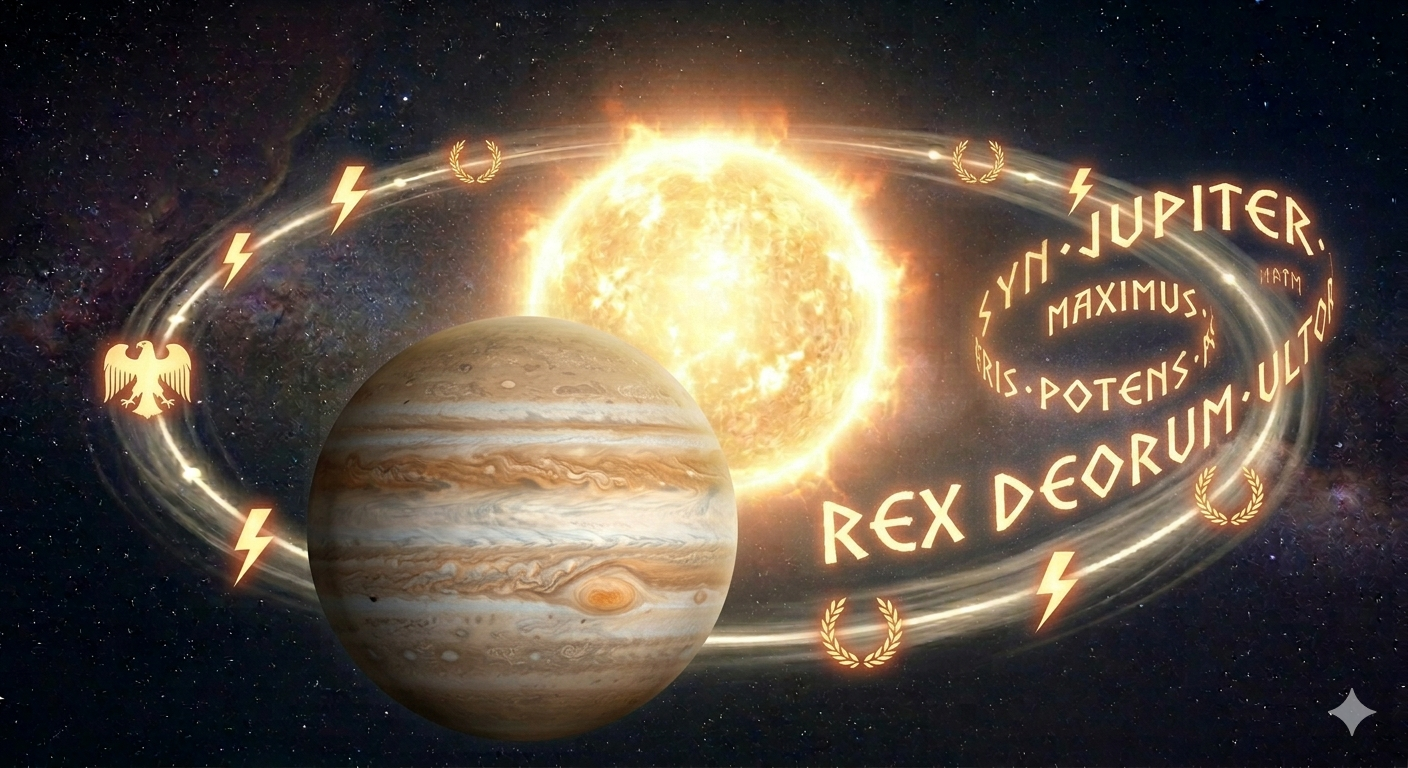
Jupiter is the largest planet in the solar system, so massive that it contains more than twice the mass of all the other planets combined. Its sheer size and dominance made it stand out as the most powerful object among the planets. Because of this, it was named after Jupiter, the king of the Roman gods. The name reflects its commanding presence, much like the god who ruled over the sky and all other deities.
Jupiter is also known for its Great Red Spot — a massive storm that has been raging for hundreds of years, further adding to its reputation as a powerful and turbulent giant.
Saturn — The God of Time
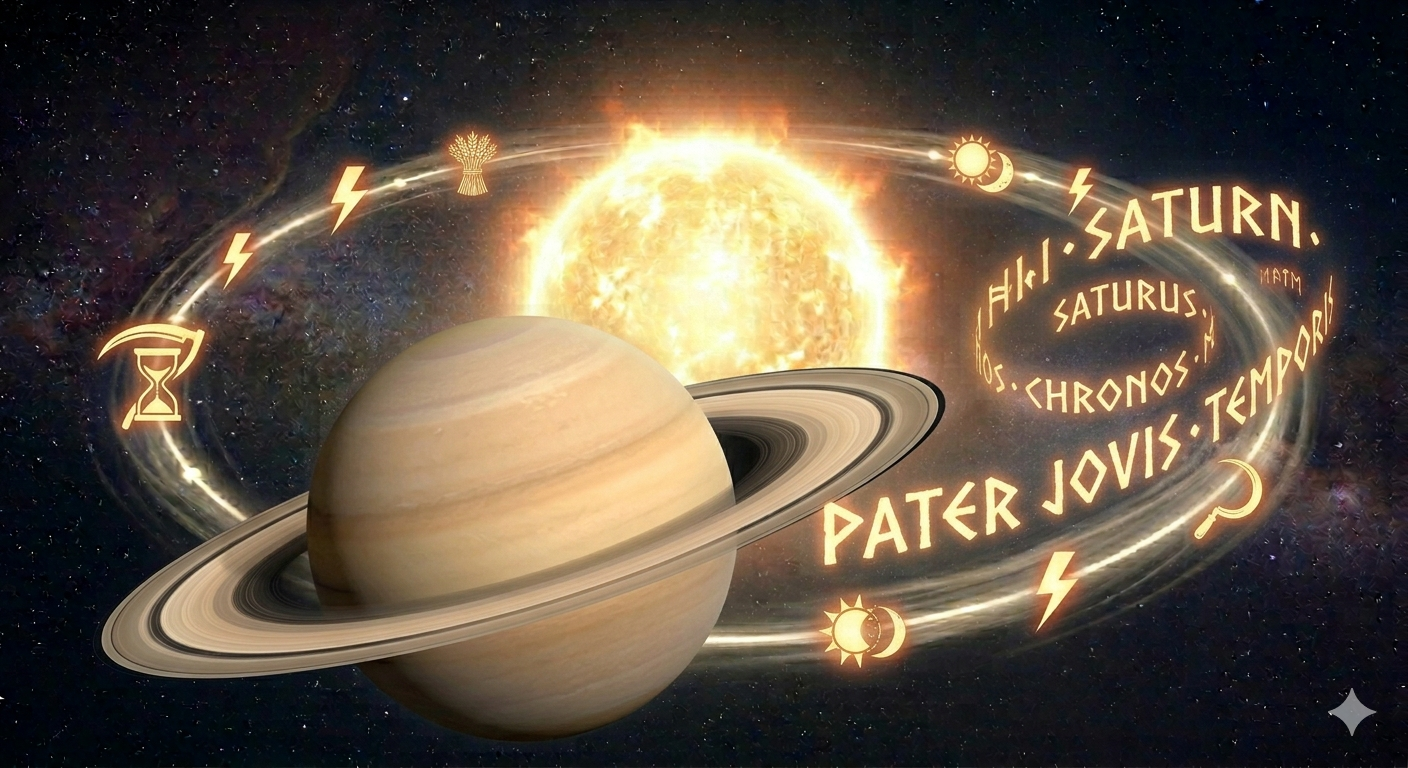
Saturn is famous for its massive ring system, making it one of the most visually striking planets in the solar system. It was named after Saturn, the Roman god of time and harvest, who was also the father of Jupiter in mythology. This connection reflects a powerful lineage, linking generations of gods just like the planets themselves.
The name also fits the planet’s slow orbit — Saturn takes about 29 years to circle the Sun, reinforcing its association with time and age.
Uranus — The Ancient Sky
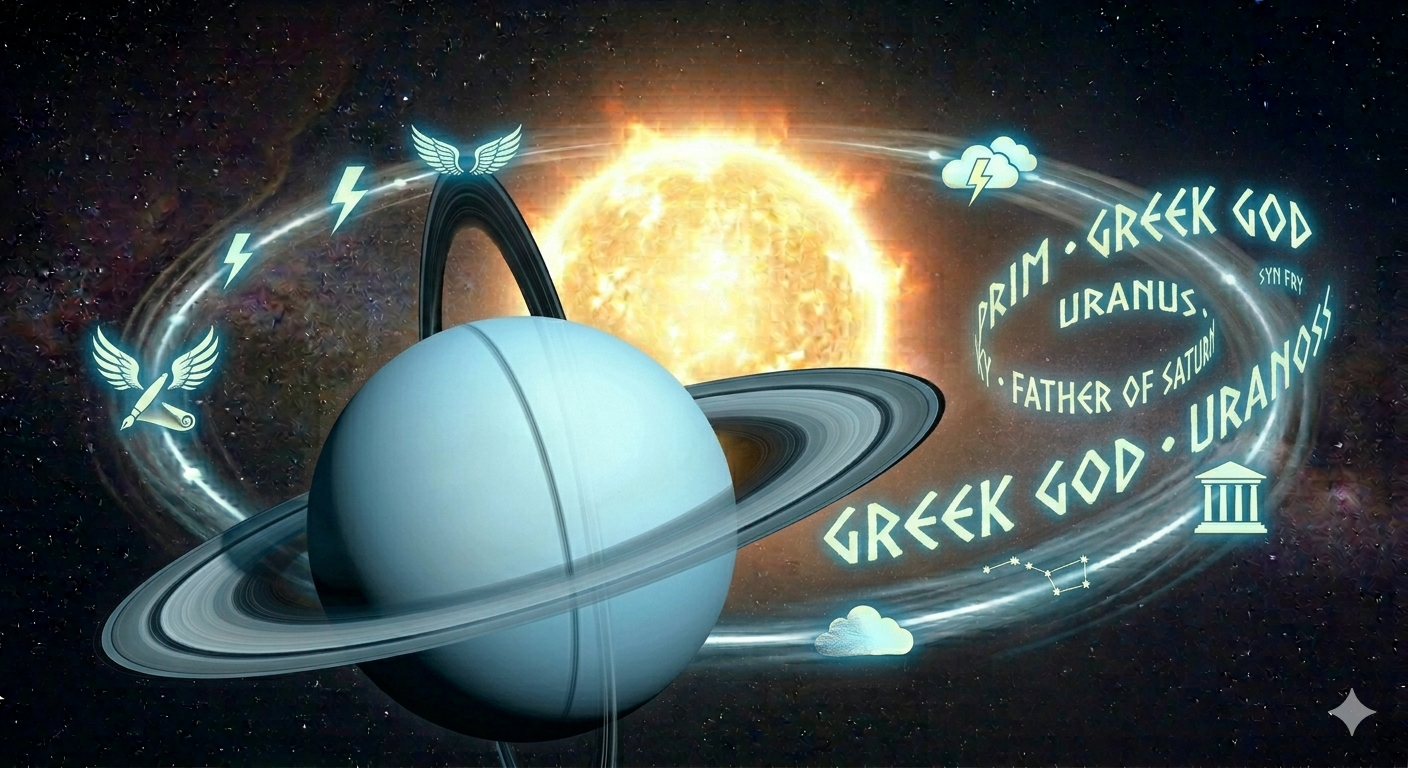
Uranus is the only planet named after a Greek god instead of a Roman one, making it stand out from the rest of the solar system. It was named after Uranus, the primordial god of the sky. This choice kept the mythological family line intact, since Uranus was believed to be the father of Saturn, who in turn was the father of Jupiter.
The name reflects both its place in mythology and its position far out in the solar system, orbiting in the distant, cold regions beyond Saturn.
Neptune — The Ocean Ruler
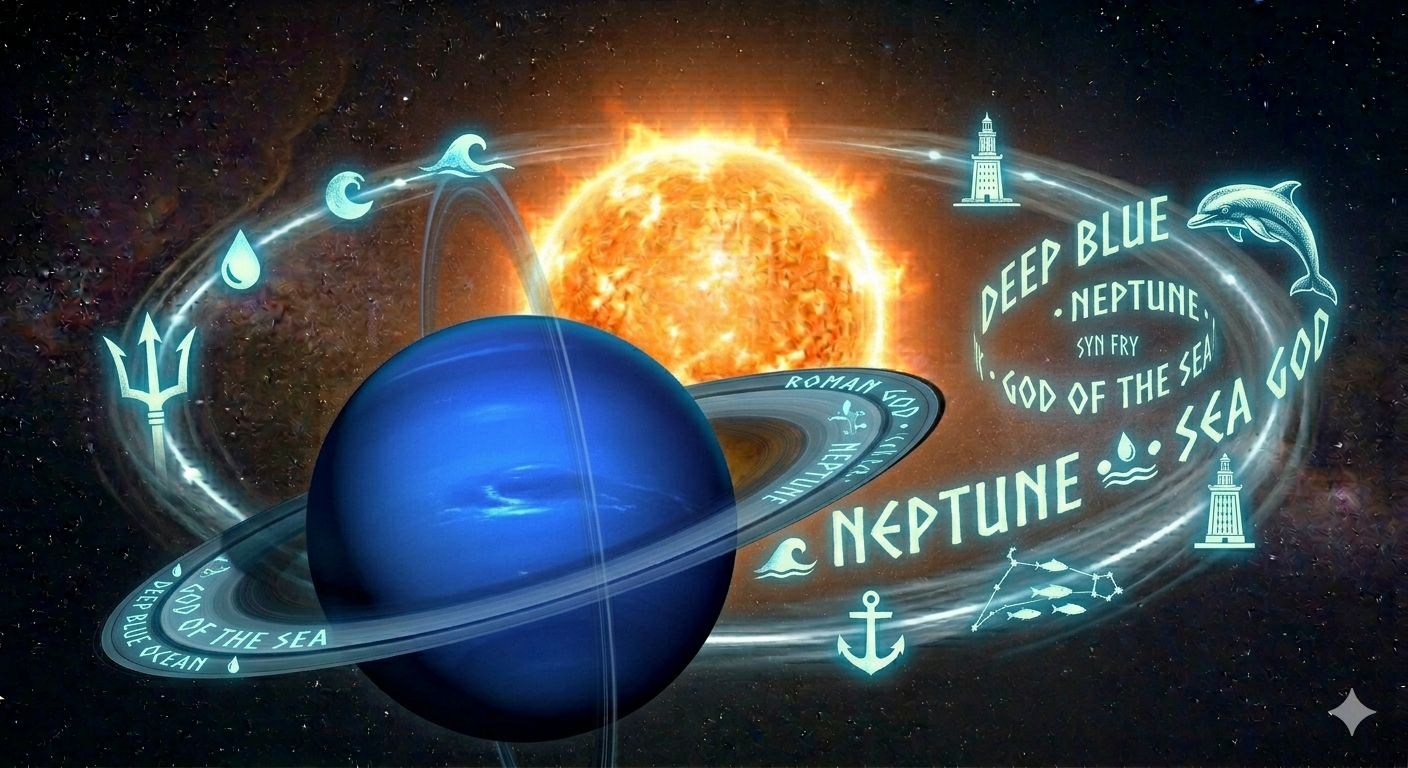
Neptune stands out for its deep blue color, which closely resembles Earth’s oceans when viewed from space. This striking appearance is caused by methane in its atmosphere, which absorbs red light and reflects blue tones.
Because of this ocean-like color, it was named after Neptune, the Roman god of the sea. The name perfectly matches both its appearance and the sense of mystery surrounding this distant, icy world.
Pluto — The Lost Planet
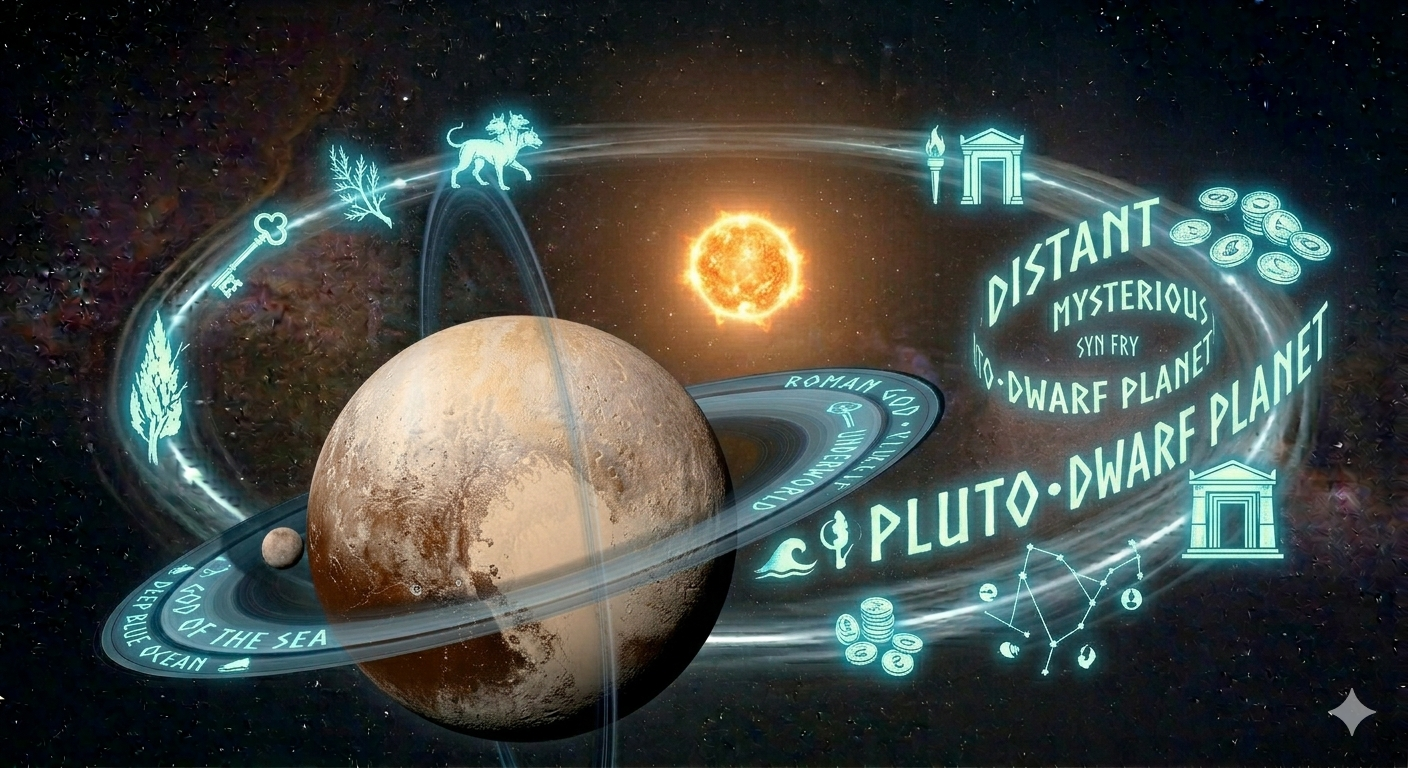
Pluto was once considered the ninth planet, but in 2006, it was reclassified as a dwarf planet after astronomers redefined what qualifies as a planet.
Despite this change, its name remains iconic. It was named after Pluto, the Roman god of the underworld — a fitting choice for a cold, distant world that orbits far beyond Neptune in the dark outer regions of the solar system.
Final Thoughts
The planets aren’t just scientific objects — they’re part of human history.
Each name reflects how ancient civilizations saw the universe: full of gods, power, beauty, and meaning. And even today, those names still connect us to that imagination.
From gods of war to symbols of beauty, the names of the planets reveal how early humans tried to understand the universe — blending observation with mythology and imagination.
Which planet name surprised you the most? Check out our full video on How the Planets Got Their Names to see the complete breakdown.
For more fascinating facts about science, history, and the world around us, visit Too Lazy Facts.