Big green leaves, soft texture, almost like something you’d brush past without thinking.
But the Gympie Gympie plant is the kind of mistake you only make once. Because the moment you touch it, you’ll understand why people call it the “suicide plant.”
What Is the Gympie Gympie Plant?
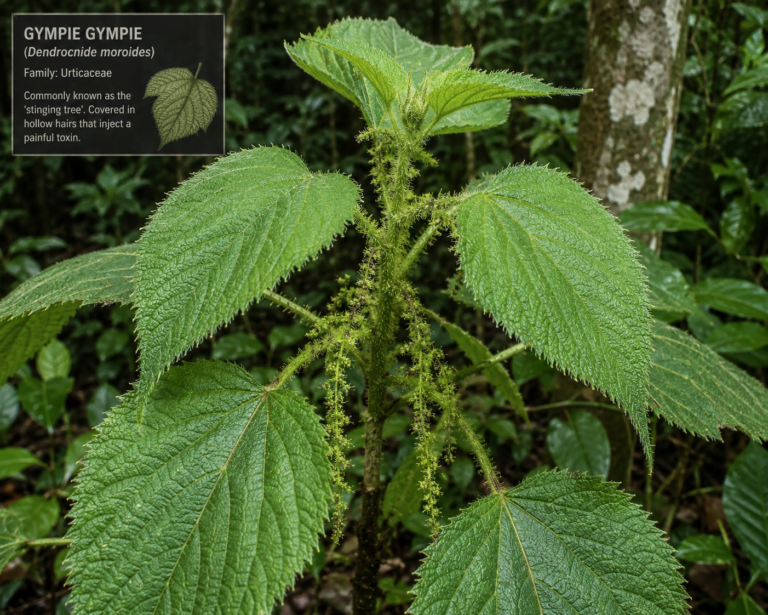
The Gympie Gympie plant, scientifically known as Dendrocnide moroides, is a stinging tree found in the rainforests of northeastern Australia.
It doesn’t bite. It doesn’t move. It just sits there.
But every part of it, especially the leaves, is covered in tiny hair-like needles. You won’t even see them unless you look very closely.
And that’s the problem.
What Happens If You Touch the Gympie Gympie Plant?
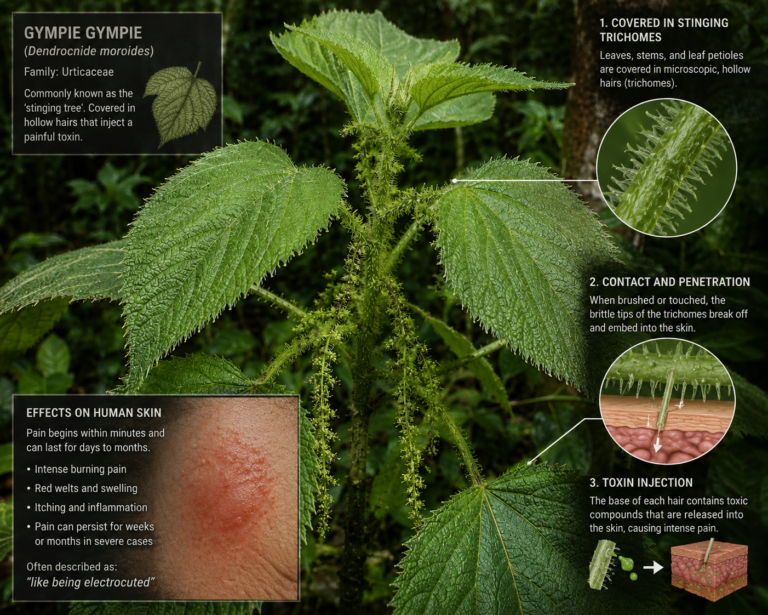
Those tiny hairs act like microscopic syringes.
The moment your skin makes contact, they inject a powerful neurotoxin. The pain hits fast and hard, often described as a mix of:
- Being electrocuted
- Burned with acid
- And stabbed at the same time
And it doesn’t just go away.
Some people report the pain lasting for days, weeks, or even months. In certain cases, it can come back years later when triggered by cold water or even a simple touch.
Why Is It Called the “Suicide Plant”?
There’s no solid scientific record proving people have taken their lives because of this plant. That part often gets exaggerated online. But the nickname didn’t come from nowhere.
The pain is so intense and long-lasting that some victims have reportedly said it made them feel desperate enough to consider extreme measures. That’s where the name stuck.
So while the term “suicide plant” grabs attention, it’s more about how brutal the experience feels rather than a confirmed outcome.
Why Does It Hurt So Much?
Scientists believe the Gympie Gympie plant produces a unique toxin that aggressively affects pain receptors.
Recent studies suggest these toxins, sometimes called “gympietides,” can bind to nerve cells and keep sending pain signals long after the initial contact.
That’s why the sting doesn’t behave like a normal burn or insect bite. It lingers. It comes back. And it can feel just as strong days later.
Where Does the Gympie Gympie Plant Grow?
You’ll mostly find the Gympie Gympie plant in:
- Rainforests in Queensland, Australia
- Some parts of Indonesia
It tends to grow in areas people might hike through, which makes accidental contact more common than you’d expect.
Locals know to avoid it.
Tourists… not always.
Can It Actually Kill You?
Directly? Very unlikely.
But the pain can be severe enough to cause panic, shock, or dangerous reactions depending on the person. Large exposures or contact with sensitive areas, such as the face, can be especially serious.
So while it’s not a “deadly plant” in the traditional sense, it’s definitely not something you want to mess with.
Final Thoughts
The Gympie Gympie plant is one of those things that sounds exaggerated until you look into it properly. A plant that can cause pain lasting weeks or even months doesn’t feel real, but it is. And that’s what makes it so unsettling.
It doesn’t chase you, it doesn’t warn you, it just sits there looking like any other leaf in the forest. That’s the danger. It reminds you that not everything threatening in nature looks dangerous, and sometimes the worst pain can come from something you’d normally ignore. So yeah, stay curious, but maybe don’t go around touching random plants, especially this one.
For more real stories about dangerous plants and how they survive in extreme ways, visit Too Lazy Plants.