Glow in the Dark Plants sound fake at first, like something you’d only see in games or movies, but they actually exist in real life. Some of them grow naturally in forests, while others glow in the ocean or even inside labs. The crazy part is that the glow isn’t just for looks — it actually helps with survival, reproduction, or defense. Once you see how they work, you realize nature is doing things that feel almost unreal.
Here are 5 plants that glow in the dark:
5. Fluorescent Succulents (UV Reactive Plants)
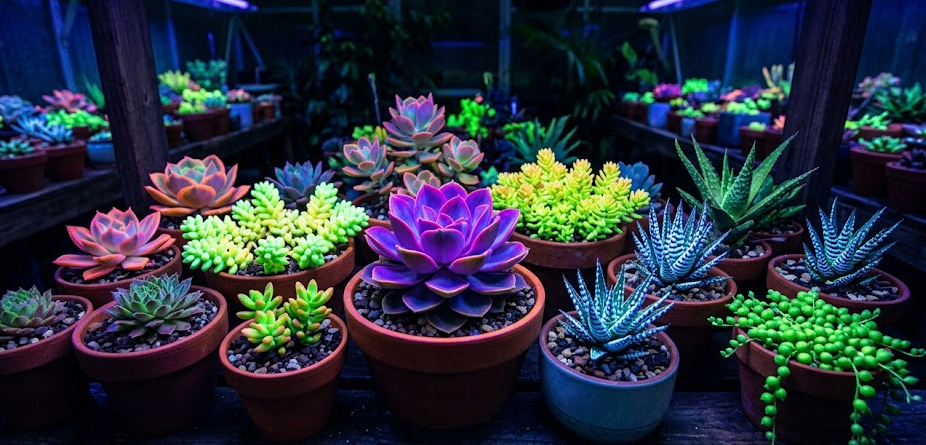
Fluorescent succulents are often included in discussions about Glow in the Dark Plants, but they don’t actually glow in complete darkness. Instead, they react to ultraviolet light and glow when exposed to a blacklight. This means their glow is not natural bioluminescence, but fluorescence caused by external light sources. Even so, the effect can still look very striking under the right conditions. These plants are popular in experimental aesthetics and decorative plant setups.
4. Glowing Moss (Goblin’s Gold)
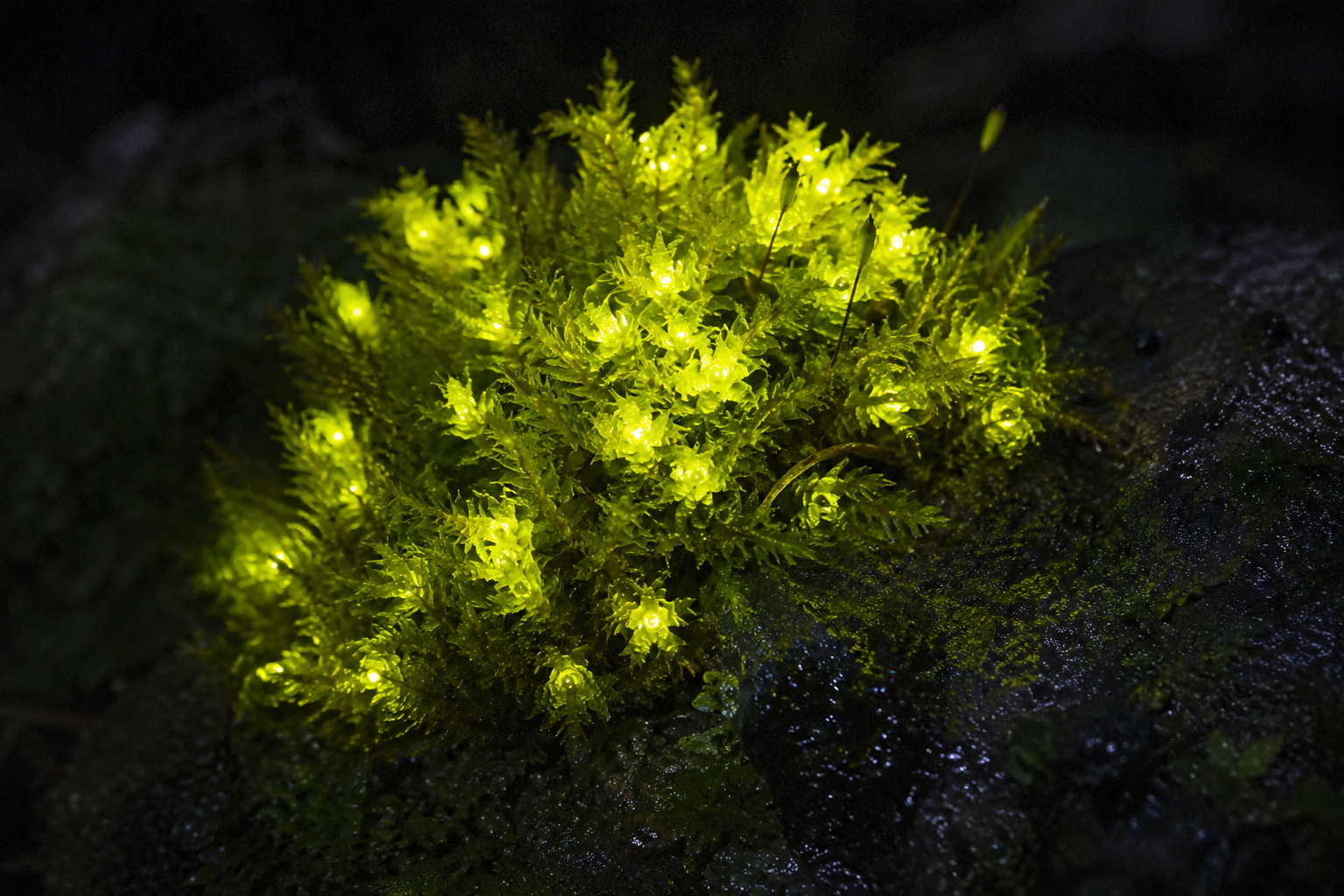
Glowing moss, often called Goblin’s Gold (Schistostega pennata), is one of the closest natural examples of a “glowing” plant. However, it is not truly bioluminescent and does not produce its own light. Instead, specialized microscopic cells reflect and concentrate faint ambient light, creating a green-gold shimmer that can appear to glow in dark caves, rock crevices, and animal burrows. This unusual optical effect has earned the moss its magical reputation, but the glow disappears when the light source is blocked. Unlike genetically engineered glowing plants, its appearance comes entirely from natural light reflection rather than biological light production.
3. Glowing Tobacco Plant
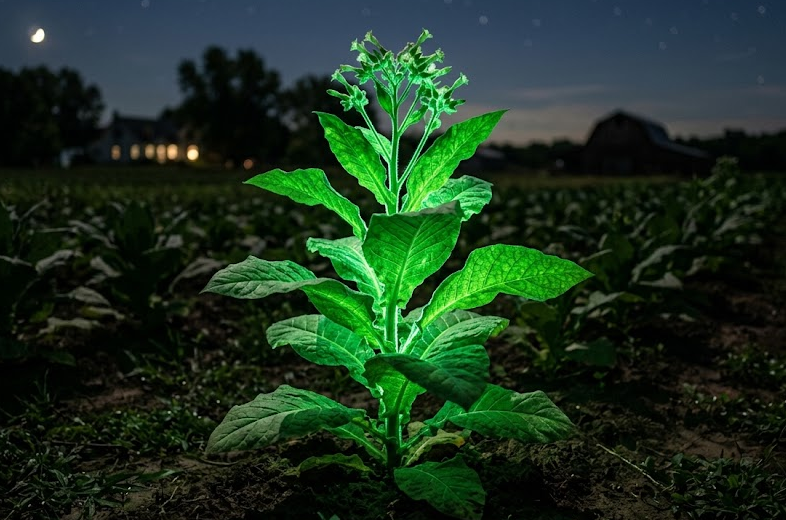
The glowing tobacco plant is one of the first real demonstrations of engineered Glow in the Dark Plants. Scientists inserted bioluminescent genes from bacteria into the plant, allowing it to produce a faint glow. The light is still very weak, but it shows that plants can be modified to emit visible light without external energy. This experiment is mainly used for research purposes rather than decoration. It helped prove that plant-based bioluminescence is scientifically possible.
2. Firefly Petunia
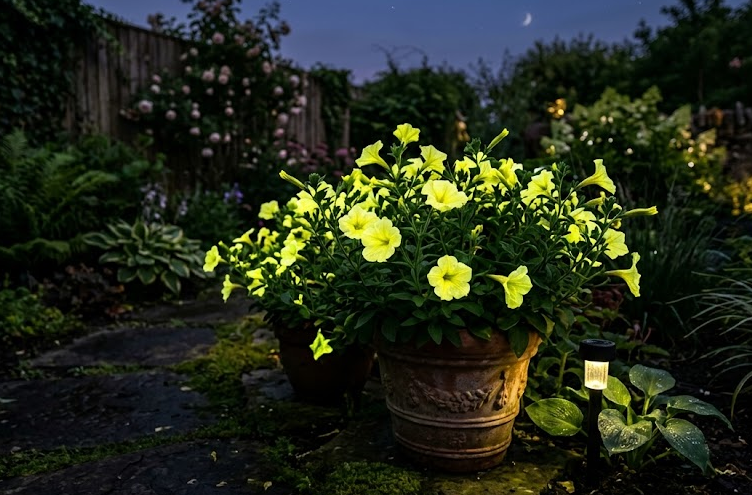
The Firefly Petunia is one of the first commercially developed examples of an engineered glowing plant. It was created using genes from bioluminescent mushrooms, enabling the flowers to emit a soft natural glow without external lighting. While the glow is subtle and most visible in darkness, it represents a major step forward compared to earlier experimental glowing plants. The project demonstrates how bioluminescence can be integrated into ornamental plants and may help pave the way for future glowing plant varieties.
1. Bioluminescent Arabidopsis (Lab Plant Model)
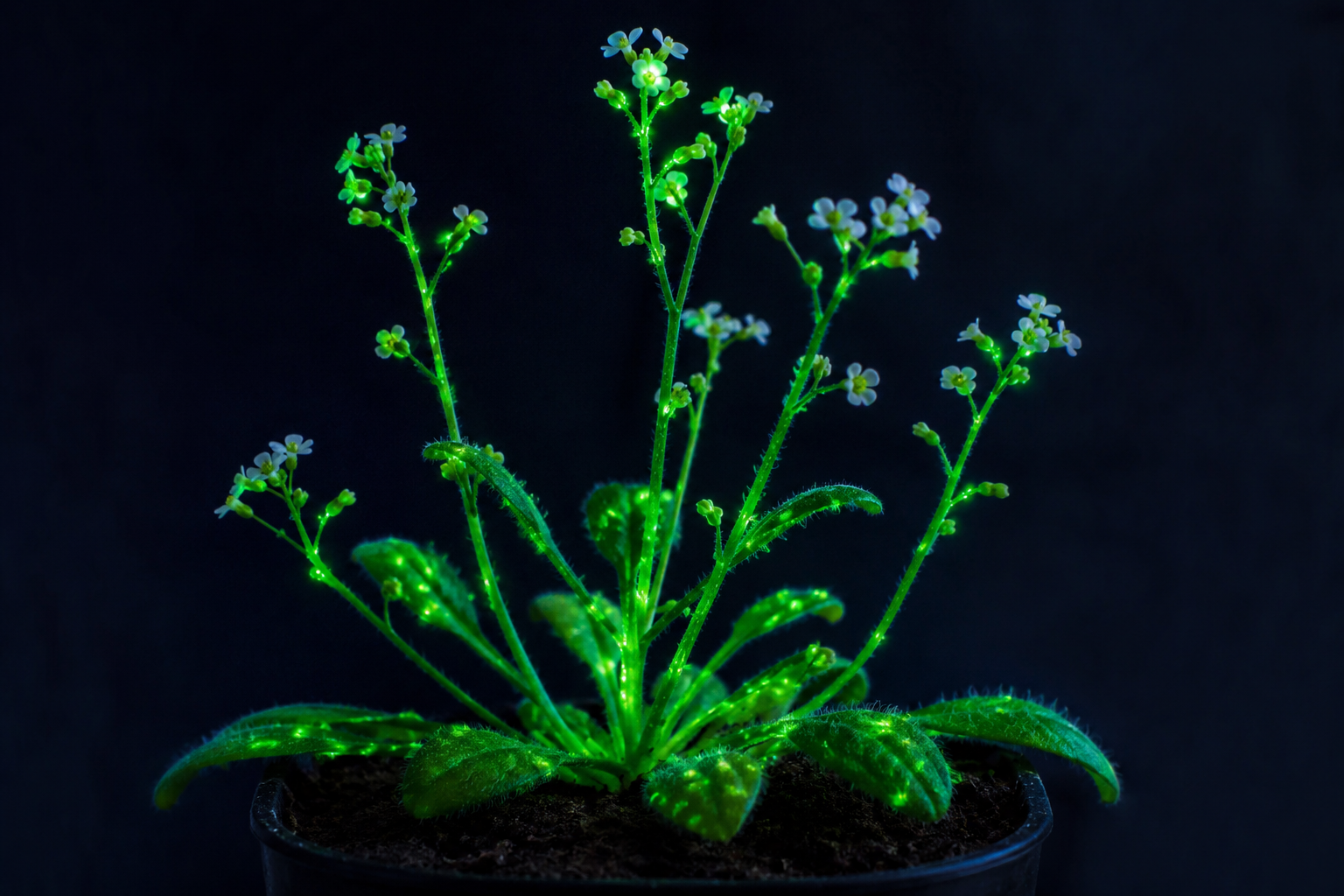
Bioluminescent Arabidopsis is one of the most advanced examples of Glow in the Dark Plants created in scientific labs. Arabidopsis thaliana is a common research plant, and scientists have successfully modified it to glow using bioluminescent genes. The glow is more controlled and stable compared to earlier experiments, making it valuable for biological research. It helps scientists study plant biology and genetic expression in real time. Among all current examples, this is one of the closest to a fully functional glowing plant system.
Final Thoughts
Glow in the Dark Plants show how strange and advanced nature can get once science starts experimenting with it. What looks like something out of fiction is actually a mix of genetic engineering, fluorescence, and biological research happening in real labs. Most of these plants aren’t naturally glowing in the wild, but they still give a clear idea of what’s possible when biology is pushed further.
As research continues, these glowing effects could become more stable, more visible, and maybe even usable outside the lab.
For more glow in the dark plants and other science discoveries from nature, visit Too Lazy Plants.