
Walk into any plant shop, and you’ll see pots going for a few dollars. Nothing crazy.
But once you step into the world of collectors, things get ridiculous fast.
Some of the most expensive plants don’t just cost more than furniture. They’ve sold for the price of a car. In extreme cases, even more.
So what’s actually going on here? Why would anyone pay thousands for something that literally grows in dirt?
Let’s break down some of the most expensive plants in the world and why people are willing to spend that much on these rare and valuable plants.
5. Variegated Monstera (Monstera Albo)
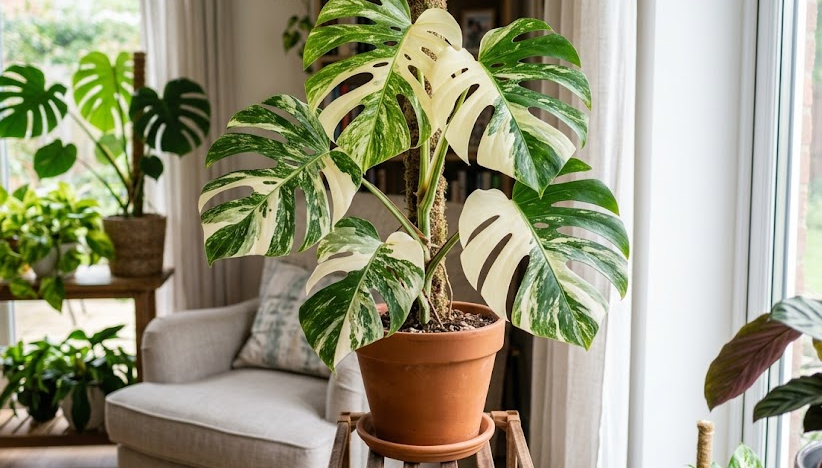
This is one of the most expensive plants in today’s collector market. At first glance, it doesn’t look that special. But then you notice the leaves. Random white patches mixed with green, and no two leaves ever look the same.
This plant, known scientifically as Monstera deliciosa ‘Albo Variegata’, gets its unique look from something called variegation, which is essentially a genetic mutation.
And that’s exactly why it’s valuable. The mutation isn’t stable. Some plants maintain that striking pattern, while others slowly lose it and revert to plain green.
So when you buy one, you’re taking a risk. Smaller cuttings usually sell for around a hundred to a few hundred dollars. Mature plants can reach a couple thousand.
In rare collector cases, especially with heavily variegated specimens, reported sales have climbed into the tens of thousands. You’re not just buying a plant here. You’re buying uncertainty.
4. Pink Princess Philodendron (Philodendron erubescens ‘Pink Princess’)
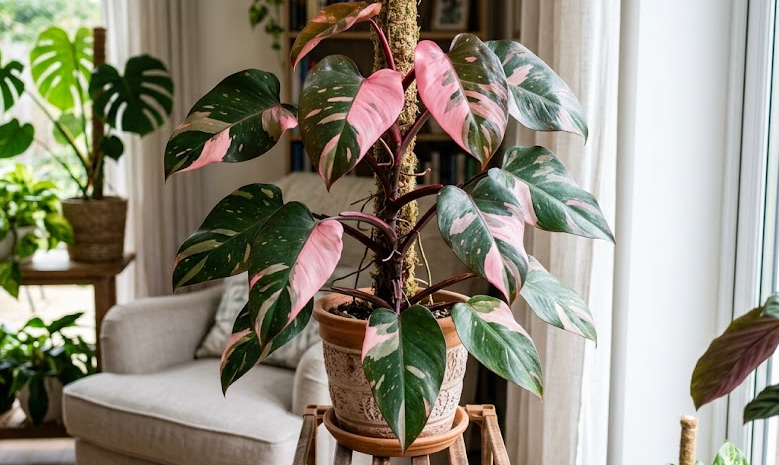
At its peak, this became one of the most expensive plants driven by social media hype. Dark green leaves with bright pink patches made it look almost fake. Naturally, people wanted it.
This plant, scientifically known as Philodendron erubescens ‘Pink Princess’, gets its color from variegation, which creates striking pink sections on the leaves. At one point, prices went crazy. Some were selling for hundreds, even over a thousand dollars. But here’s the reality.
Once growers figured out how to mass-produce it, the rarity disappeared. And when rarity disappears, so does the price. Now, you can find one for as little as $10 to $100, depending on quality. It’s one of the clearest examples of hype driving prices way up… and then crashing just as fast.
3. Variegated Monstera Adansonii (Monstera adansonii ‘Variegata’)
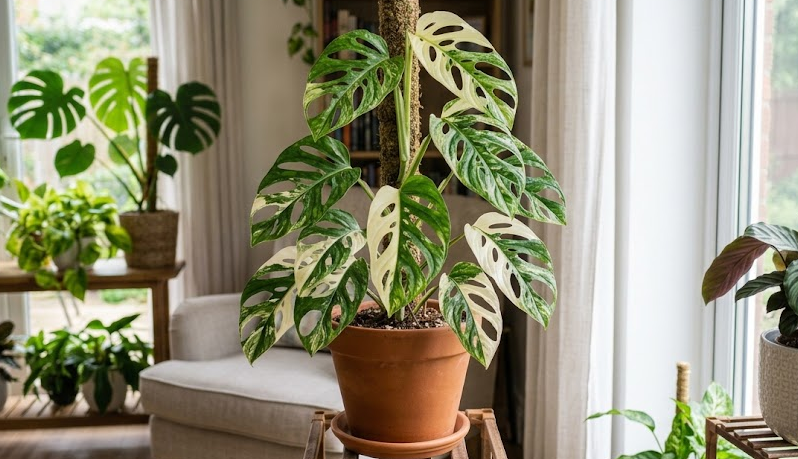
If the Monstera Albo is rare, this one can be even worse. Same idea, but with those natural holes in the leaves combined with unpredictable white or mint variegation. This plant, scientifically known as Monstera adansonii ‘Variegata’, gets its value from that unstable variegation.
And the problem is stability again. A lot of cuttings fail. Others lose their variegation over time.
So when you actually get a healthy, stable one, it becomes extremely valuable. Prices usually start around a thousand dollars and can climb to ten thousand or more depending on the plant. This is considered one of the most expensive rare plants due to its instability.
At this level, you’re not just paying for how it looks. You’re paying for the fact that it survived.
2. Rare Bonsai Trees (Various Species, often Juniperus procumbens and Pinus parviflora)
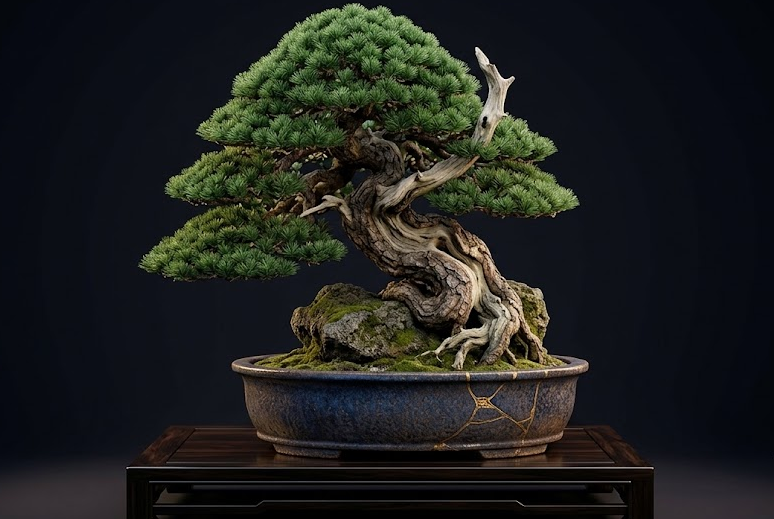
Now this is a completely different category. Bonsai isn’t just about growing a plant. It’s about shaping it over time. And when we say time, we’re talking decades. Sometimes centuries.
Many bonsai are created from species such as Juniperus procumbens (Japanese garden juniper) or Pinus parviflora (Japanese white pine), carefully trained over the years to achieve their form.
Some of these trees have been passed down through generations, maintained and refined by skilled growers.
Regular bonsai are affordable. Anyone can get one. But rare, historical ones? That’s where things get serious. Some have been valued at over a million dollars! Some of these are among the most expensive plants ever sold.
Not because they’re rare in nature, but because you cannot recreate that history. You can grow a tree. But you can’t fast-forward 100 years.
1. Shenzhen Nongke Orchid
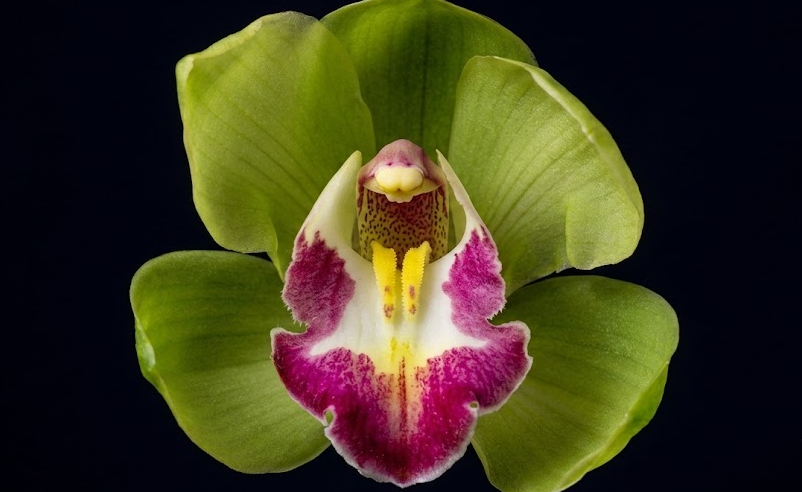
This remains one of the most expensive plants ever recorded. Unlike the others, this plant wasn’t discovered. It was created. Developed by researchers at Shenzhen Nongke University, this orchid took years of controlled cultivation before it finally bloomed.
When it did, it didn’t just attract attention. It shocked collectors. It was eventually sold at auction for around $200,000 in 2005.
What you’re paying for here isn’t just the plant itself. It’s the time, research, and effort that went into creating something that didn’t exist before. And unlike naturally rare plants, this kind of value comes from human-made rarity.
Why Are Some Plants So Expensive?
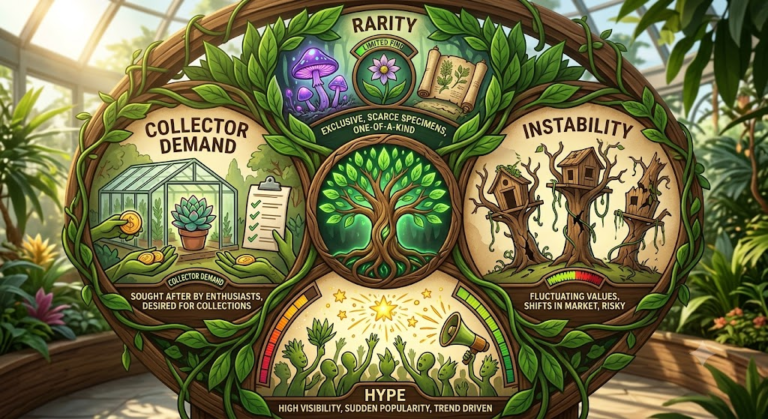
Plant prices don’t just come down to looks. When it comes to the most expensive plants, the price difference can be massive, even between plants that look similar.
What really drives the value of expensive plants is what’s happening behind the scenes. How rare they are, how difficult they are to grow, and how the market reacts all play a role. That’s why some of the most expensive plants suddenly skyrocket in value, while others drop just as fast.
At the end of the day, it always comes back to the same factors:
- Rarity – The fewer plants available, the higher the price.
- Instability – If a plant is hard to grow, unpredictable, or can lose its unique traits, it becomes more valuable.
- Hype – Social media can turn an ordinary plant into a global trend almost overnight.
- Collector Demand – Some buyers aren’t just decorating. They’re collecting plants the same way people collect luxury items.
And when all of these factors combine, prices can reach levels that don’t seem logical at first.
But once you understand the pattern, it becomes clear. Expensive plants aren’t just about appearance. They’re about scarcity, risk, and perception.
Final Thoughts
Expensive plants aren’t just about appearance. The most expensive plants in the world are driven by scarcity, risk, and demand. Strip everything away, and they’re still just plants. But once rarity, time, and demand come into play, the value changes completely.
A simple mutation, decades of care, or years of research can turn something ordinary into something people are willing to pay extreme amounts for. And as long as collectors exist, these prices aren’t going anywhere.
For more rare, expensive, and unusual plants from around the world, check out Too Lazy Plants.
Great content! Keep up the good work!
Thank you!