
Ever wondered what humanity’s first “bucket list” looked like? The Seven Wonders of the Ancient World weren’t just monuments; they were feats of engineering, culture, and legend. Out of the seven, only one still stands today.
1. Great Pyramid of Giza (Egypt)
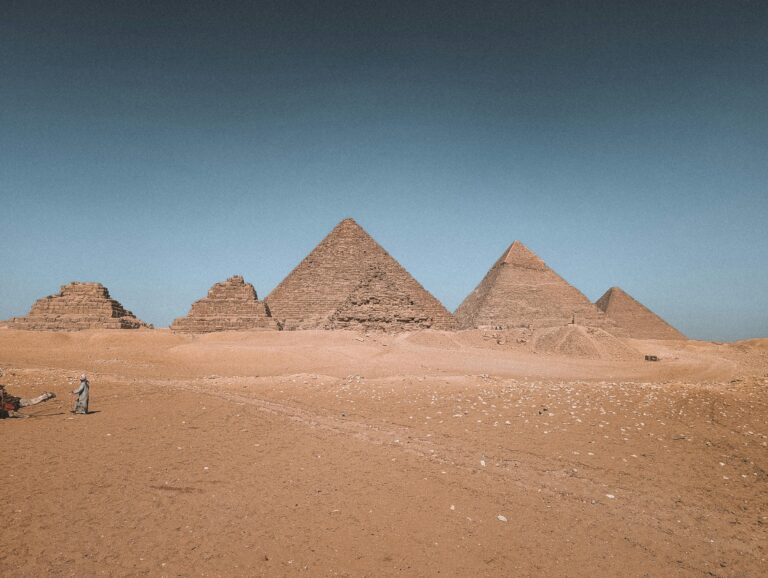
The Great Pyramid of Giza is the last remaining wonder of the original seven and one of the most impressive architectural feats in history. Built over 4,500 years ago as a tomb for Pharaoh Khufu, it was originally covered in polished limestone, making it shine under the Egyptian sun. Its precise alignment to the cardinal points and massive stone blocks — some weighing over 2 tons — demonstrate advanced engineering skills far ahead of its time. The pyramid was part of a larger complex including temples, smaller pyramids, and causeways, reflecting the Egyptians’ deep religious beliefs and obsession with the afterlife. Its endurance through millennia makes it a symbol of human ingenuity and perseverance.
2. Hanging Gardens of Babylon (Iraq)
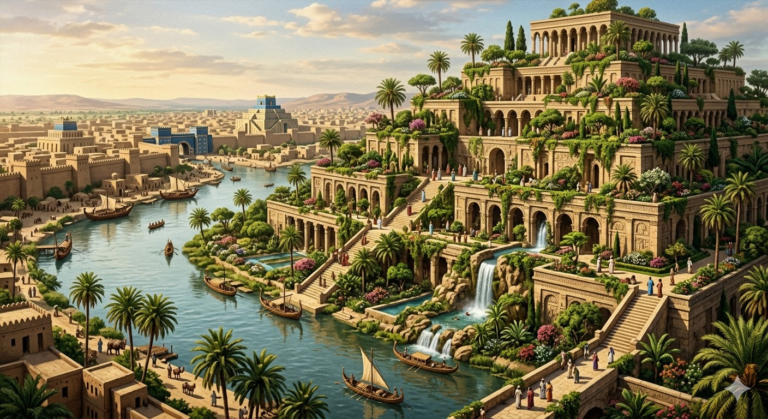
The Hanging Gardens of Babylon are perhaps the most mysterious of the seven wonders, as historians still debate their actual existence. Said to have been built by King Nebuchadnezzar II for his wife, who missed the green hills of her homeland, these gardens were described as a series of terraced platforms with lush vegetation, waterfalls, and exotic plants. If they truly existed, they would have required an advanced irrigation system to lift water from the Euphrates, a feat of engineering almost unimaginable for the time. The gardens became a legend of love, ambition, and the blending of nature and architecture, inspiring artists and writers for centuries.
3. Statue of Zeus at Olympia (Greece)
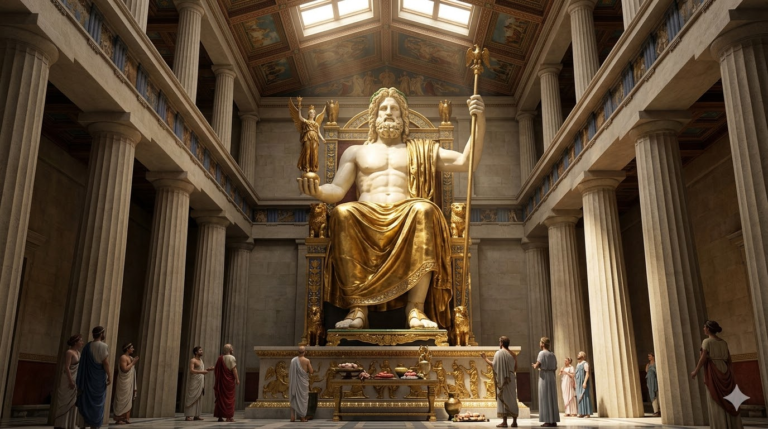
The Statue of Zeus at Olympia was a colossal depiction of the king of the Greek gods, standing approximately 12 meters tall. Crafted by the sculptor Phidias from gold and ivory, it was housed in a massive temple at Olympia and served as a religious centerpiece during the ancient Olympic Games. The statue captured the ideal of Greek artistry—perfect proportions, serene expression, and intricate detail. Worshippers would travel from all over Greece to see it, reflecting the central role of gods in everyday life. Though it was eventually destroyed, descriptions of the statue have survived, giving us insight into the grandeur and spiritual significance it once held.
4. Temple of Artemis at Ephesus (Turkey)
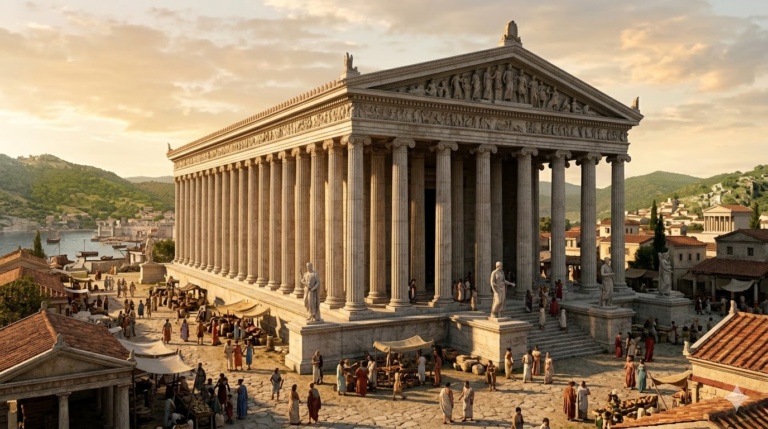
The Temple of Artemis was one of the largest temples of the ancient world, dedicated to the goddess of the hunt and protector of Ephesus. The temple was rebuilt several times after being destroyed, with the most famous version featuring over 100 massive marble columns and elaborate sculptures. It was not only a place of worship but also a symbol of the city’s wealth and artistic achievement. Pilgrims and merchants would visit the temple, making it a cultural and economic hub. The combination of religious devotion, monumental scale, and intricate carvings made it an architectural marvel of the classical era.
5. Mausoleum at Halicarnassus (Turkey)
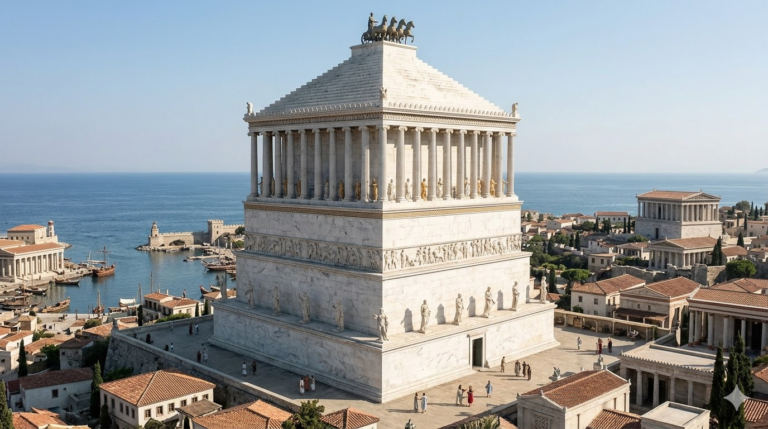
The Mausoleum at Halicarnassus was the grand tomb of King Mausolus, built by his wife Artemisia II in 350 BCE. Its design combined Greek, Egyptian, and Lycian architectural styles, and it was adorned with statues and reliefs depicting gods, humans, and animals. Standing roughly 45 meters tall, it was considered one of the most beautiful tombs ever built, so much so that the term “mausoleum” is now used for grand tombs worldwide. The structure’s elegance and sculptural richness made it a symbol of power, love, and artistic achievement that would influence architecture for centuries.
6. Colossus of Rhodes (Greece)
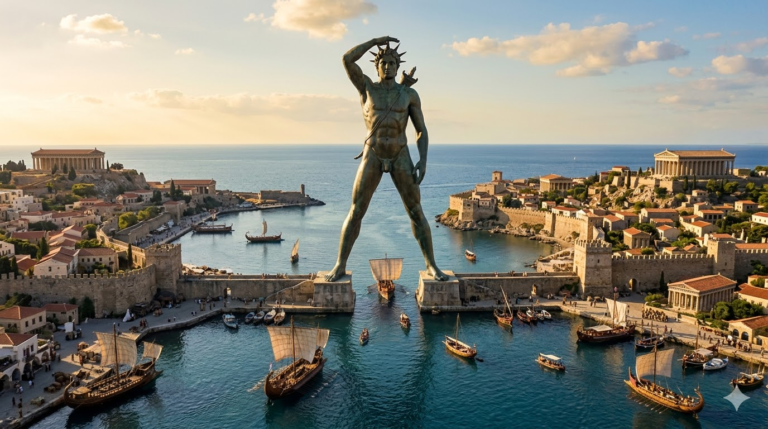
The Colossus of Rhodes was a giant bronze statue of the sun god Helios, erected to celebrate the city’s victory over a siege in 305 BCE. Estimated to stand about 33 meters tall, it was one of the tallest statues of the ancient world, straddling the harbor of Rhodes. Though it stood for only 54 years before an earthquake toppled it, the Colossus symbolized the city’s resilience, freedom, and ambition. Its scale and daring construction inspired future generations of artists and engineers, proving that human creativity could reach monumental heights.
7. Lighthouse of Alexandria (Egypt)
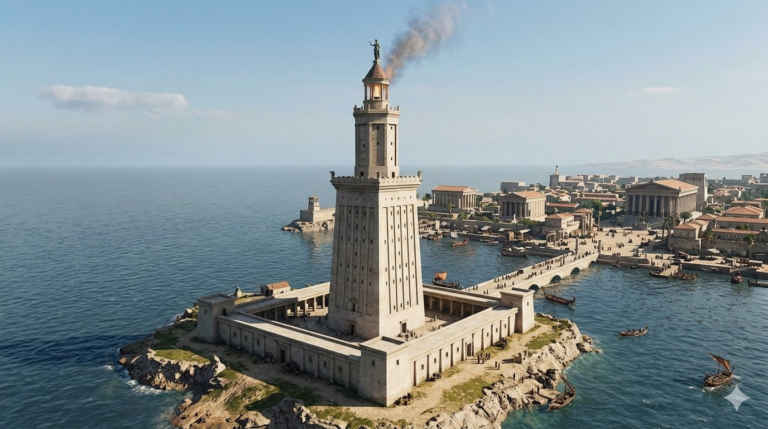
The Lighthouse of Alexandria, also known as the Pharos, was one of the tallest man-made structures of the ancient world, estimated at 100–130 meters high. Built on the island of Pharos to guide sailors safely into the busy port of Alexandria, it used a combination of fire and mirrors to create a beam visible from miles away. Beyond its practical purpose, the lighthouse became a symbol of human ingenuity and maritime power. Surviving several earthquakes, it stood for over a millennium and inspired the design of modern lighthouses, proving that the ancients could combine functionality and artistry in extraordinary ways.
From pyramids to statues of gods, these wonders represented the pride of civilizations — power, beauty, and ambition carved in stone and legend.
Do you think anything we build today will last thousands of years?
Watch our full video here: 7 Ancient Wonders of the World
For more historical breakdowns and fascinating facts, visit Too Lazy Facts.